
Choosing the Right Water Tank Size for Your Home or Property
Wrong tank size costs you money twice. Too small and you run dry. Too large and you overspend on a system your roof can never fill. Here is the complete guide to getting it right — the first time.
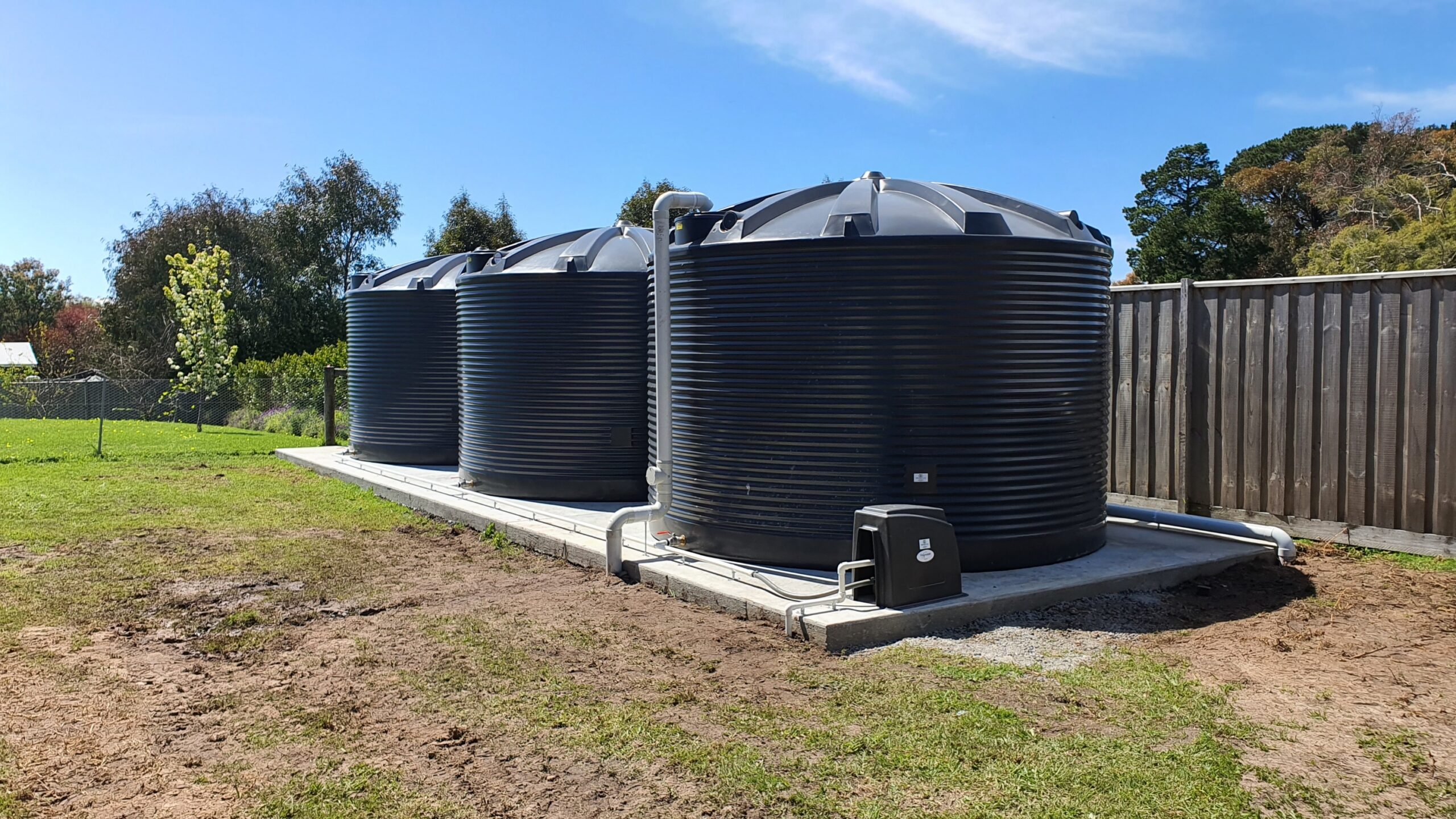
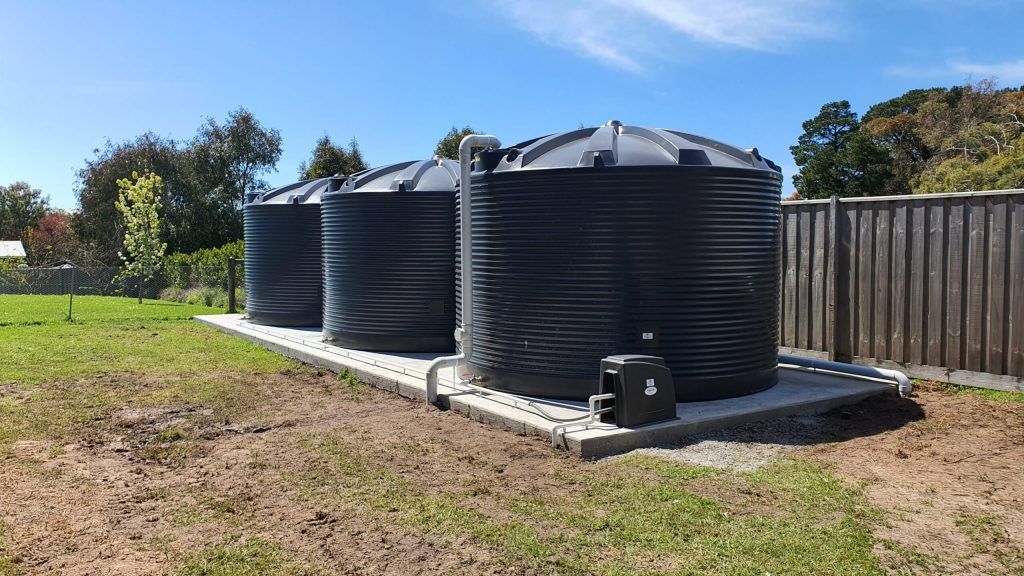
Poly round rainwater tanks — the most popular choice for Australian residential and rural properties.
Why Getting the Size Right Actually Matters
A rainwater tank is a long-term investment. In Sydney and across NSW, most households expect theirs to last 15 to 25 years or more. Pick the wrong size and that investment either underperforms for two decades or sits half-empty, never earning back its installation cost.
The most common mistake is choosing based on budget alone. A 2,000L tank might seem affordable upfront, but if your household of four uses 600 litres a day, you will drain it in under four days of dry weather. The second mistake is going too large. A 25,000L steel tank on a property with a small roof catchment in a low-rainfall area could take years to fill to capacity.
The right tank size is the intersection of three things: your household's daily water demand, your roof's ability to collect rain, and how many dry days you need to bridge between downpours.
This guide gives you the formulas, the comparisons, and the expert knowledge to land in the right place for your specific property — whether you are on a suburban block in Sydney's Inner West, a semi-rural property in the Southern Highlands, or a working farm in the Central West of NSW.
How Much Water Does Your Household Actually Use?
Before you can choose a tank size, you need to know your demand. The Australian average sits at 150 to 200 litres per person per day when accounting for all indoor uses. This includes showers, toilets, laundry, cooking, and drinking. It does not include garden irrigation, which adds considerably more during summer.
Daily Usage Breakdown (Per Person)
| Activity | Usage | Frequency | Daily Total |
|---|---|---|---|
| Shower (5 min) | 50L | Once daily | 50L |
| Toilet flushing | 6–9L per flush | 5–6 times daily | ~40L |
| Laundry (front loader) | 60–80L per load | Shared across household | ~20L |
| Drinking and cooking | ~3L | Daily | 3L |
| Dishwasher | 15–20L per load | Shared across household | ~8L |
| Hand washing / taps | Variable | Multiple times | ~15L |
| Indoor Total (approx.) | ~136L | ||
| Garden irrigation | Variable — highly seasonal | 100–500L extra | |
Quick Household Size Reference
| Household Size | Est. Daily Usage (Indoor) | With Garden | Monthly Total |
|---|---|---|---|
| 1 person | 150L | 250–400L | 4,500–12,000L |
| 2 people | 300L | 400–600L | 9,000–18,000L |
| 4 people (family) | 600L | 700–1,100L | 18,000–33,000L |
| 6 people | 900L | 1,000–1,500L | 27,000–45,000L |
"A family of four uses roughly 600 litres per day indoors. Over a two-week dry spell, that's 8,400 litres. Your tank needs to cover that gap — and then some."
Calculate How Much Rain Your Roof Can Collect
The other side of the equation is how much water your roof can capture. This is surprisingly simple to calculate, and it will tell you whether your tank is a supplement to mains water or something closer to a primary supply.
Worked Example
Say you are in Sydney — average annual rainfall of around 1,200mm. Your roof catchment area connected to the tank is 150m².
150m² × 1,200mm × 0.85 = 153,000L per year
That is 153,000 litres per year, or roughly 418 litres per day on average — enough to cover most indoor needs for a couple or supplement a family's indoor use significantly when combined with mains water.
Sydney Rainfall Reference by Region
| Location | Annual Rainfall (avg) | Harvest from 150m² Roof | Best Tank Strategy |
|---|---|---|---|
| Sydney CBD / Eastern Suburbs | ~1,200mm | ~153,000L/yr | 5,000–10,000L tank |
| Western Sydney (Penrith) | ~800mm | ~102,000L/yr | 5,000–10,000L tank |
| Southern Highlands | ~900mm | ~115,000L/yr | 10,000–22,500L tank |
| Canberra / ACT | ~620mm | ~79,000L/yr | 5,000–10,000L tank |
| Illawarra / Wollongong | ~1,300mm | ~166,000L/yr | 10,000L+ tank |
| Central West NSW (Bathurst) | ~630mm | ~80,000L/yr | 10,000–25,000L tank |
Tank Size by Property Type
Your property type is one of the strongest indicators of the right tank size. Here is a practical breakdown across the most common property scenarios Transform Water handles across Sydney, Canberra, and regional NSW.
| Property Type | Typical Use Case | Recommended Size | Tank Type | Suitability |
|---|---|---|---|---|
| Urban apartment / unit | Garden, courtyard irrigation | 500L – 1,500L | Bladder or slimline | Easy fit |
| Small suburban home (1–2 people) | Garden, toilet, laundry | 2,000L – 5,000L | Slimline poly | Easy fit |
| Family home (3–5 people) | Toilet, laundry, garden | 5,000L – 10,000L | Round poly | Standard |
| Large family home (5+ people) | Full indoor and outdoor use | 10,000L – 22,500L | Round poly or steel | Standard |
| Property with limited space | Side of house, narrow access | 1,000L – 5,000L | Slimline or under-deck | Plan required |
| Semi-rural / acreage | Full household + irrigation | 22,500L – 50,000L | Round poly or corrugated steel | Standard |
| Rural / no mains access | Primary supply | 50,000L – 110,000L+ | Corrugated steel (Colorbond) | Engineer review |
| Farm / agricultural | Irrigation, livestock, fire | 50,000L – 250,000L+ | Steel or concrete | Engineer review |
| Commercial / industrial | Stormwater reuse, fire compliance | Custom: 25,000L – 500,000L | Steel, concrete, modular | Engineer review |
Which Type of Tank Suits Your Property?
Once you know your size range, the next question is which tank type works for your space. Each has a distinct set of strengths — and the right pick depends on your block size, aesthetics, access, and how you plan to use the water.
- 30–50% cheaper than steel or concrete
- No rust or corrosion — ideal for coastal areas
- Lightweight, no heavy machinery needed
- 25-year design life
- Wide colour range
- Fits through standard side gates
- Minimal footprint
- Available in poly and steel
- Stackable in multiples for greater volume
- Zero visual footprint
- Water stays cooler, stays cleaner
- Ideal for tight urban lots
- BASIX-compliant option for new builds
- Superior volume options
- Fire-resistant construction
- Suited to bushfire-prone areas
- Long warranties
- Fits irregular spaces
- No visible tank at all
- Good for new builds with under-floor access
- Modular, can link multiple units
- Fire-fighting pump fittings
- Meets RFS and council fire requirements
- Irrigation system integration
- Multi-tank manifold setups available
Rainwater Tank Specifications at a Glance
Comparing Tank Materials: Poly, Steel and Concrete
Once you have your size range confirmed, material choice comes down to budget, site conditions, and purpose. Here is an honest side-by-side comparison.
| Factor | Poly | Corrugated Steel | Concrete |
|---|---|---|---|
| Upfront Cost | Lowest | Medium–High | Highest |
| Installation Complexity | Simple — no machinery | Moderate — on-site assembly | Complex — excavation required |
| Corrosion Resistance | Excellent — won't rust | Good — needs internal liner | Excellent |
| Max Capacity (standard) | Up to 50,000L | Up to 500,000L+ | Unlimited (built on-site) |
| Bushfire Suitability | Good (with pump) | Excellent | Excellent |
| Underground Option | Yes (purpose-built) | Not typically | Yes (traditional) |
| Shapes Available | Round, slimline, bladder, underground | Round only | Custom (poured in place) |
| Lifespan | 15–25+ years | 25–30+ years | 50+ years |
| Best For | Most residential and rural properties | Rural, farm, fire | Permanent rural storage |
Transform Water's recommendation: For most Sydney and Canberra residential properties, a poly round or slimline tank is the most practical and cost-effective starting point. For properties in the Southern Highlands or rural NSW where primary supply is the goal, corrugated steel gives you the capacity headroom you need.
Council Approval and NSW Rebates
One question we hear every week: "Do I need approval for my tank?" The short answer is: usually not for standard residential tanks under 10,000L, but it depends on your local council.
NSW General Rules
- Most tanks under 10,000L on residential lots are exempt from Development Approval under NSW planning rules — but always check with your local council first.
- Tanks over 10,000L require Development Approval from your local council in most cases.
- Any tank connected to internal plumbing (toilets, laundry, hot water) requires a licensed plumber and council notification in all cases.
- BASIX requirements apply to new homes and major renovations in NSW — your tank may need to meet minimum capacity thresholds.
- Transform Water handles all permits, council notifications, and BASIX compliance on your behalf.
Several NSW councils and water utilities offer rebates for rainwater tank installation in 2026. The amount depends on your council, tank size, and how the water is connected. Transform Water helps every customer access available rebates as part of our installation service.
Important: Rebate amounts, eligibility, and closing dates change regularly. Always confirm with your local council or water utility before purchasing. Transform Water's team checks current rebate availability for every customer at consultation stage — at no extra cost.
Frequently Asked Questions