
Water Tank Filtration
Rainwater Tank Filtration – Quick Summary
Rainwater tank water is not safe to drink without treatment. At Transform Water, we lab-test your water first, then design and install a custom filtration system that removes bacteria, sediment, and rooftop chemicals. Whether your tank feeds drinking water, a whole-house supply, or just the garden, the right filter is the difference between water that is safe and water that only looks safe. Start with a lab test, not a guess.
Water Tank Filtration to Protect Your Water Quality
That water in your tank looks clean. Right? Wrong. The unseen contaminants of rainwater tank water make contact with it a very dangerous move. But what if you needed to? What if you wanted to go off grid? What if you decided one day that you wanted to use that rainwater tank for more than just gardening?
If you do, then it’s time to consider water filtration. There’s a host of filtration options for rainwater tanks that can be customised for you.
But how do we even know what is right for you?
Great question! In some cases, our experience tells us what is right for your tank system, but largely, we rely on lab testing of samples collected from your tank system to determine what filter system is right. No more anecdotal advice, no more guesswork. Instead it’s just hard data that gives us insight into your rainwater tank system.
Get your Tank Water Lab Tested
So what does it mean to get a lab test on a sample of rainwater from your tank system? It means that you aren’t guessing what filter is right, which means you aren’t burning money trying to figure out the right combination of filtration.
Remember, it doesn’t just come down to micron rating, it comes down to treatment, filter material, filter size, and filter flow to name a few guidelines.
Water stored in a tank, even if it’s from a bore, river, spring or rainwater CAN be safe for human consumption when treated appropriately. We’d love to help you get started on using this water for the better.
We can supply and fit any filtration system to suit the needs of your premises.

How Do Tank Rainwater Filtration Systems Work?
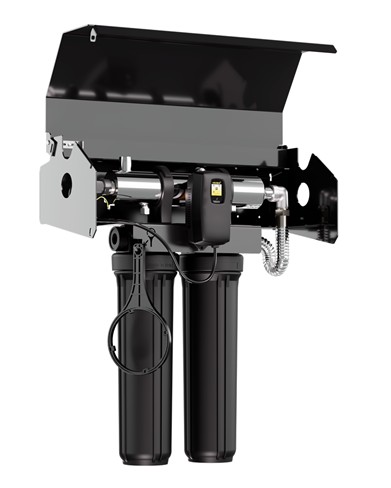
Water tank filtration systems are a technological solution designed to remove impurities and harmful microbes from rainwater tanks. These systems can filter water through physical barriers, chemical processes, heat or other biological processes. By installing and maintaining a proper water filtration system, you are able to have a renewable source of water for drinking, irrigation, livestock and other agricultural or industrial applications.
The components of a water filtration system are the filter media, which uses materials like sand, charcoal or synthetic substances to trap and remove contaminants. It can also impose a physical barrier to keep out sediments, or biofilm to decompose pollutants that can be harmful. These systems also have pumps, pipes and valves that together move water throughout the system and help control the flow of water.
Rainwater Tank vs Other Water Sources: What Filtration Does Each Need?
| Water Source | Key Risks | Typical Filtration Required |
|---|---|---|
| Rainwater tank | Bacteria, sediment, bird and animal contamination, rooftop runoff chemicals | UV sterilisation, sediment pre-filter, carbon filter |
| Mains (town) water | Chlorine, fluoride, minor sediment | Carbon filter, sediment pre-filter |
| Bore water | Iron, manganese, hardness minerals, bacteria | Sediment, carbon, UV, water softening |
| Dam or river water | High sediment load, biological contamination, agricultural chemicals | Multi-stage treatment, UV, aeration |
Rainwater tanks carry a specific microbial risk that mains water does not. UV sterilisation is almost always part of a properly specified tank filtration system.
Three Signs Your Tank Filtration System Needs Attention
- Your water has developed a musty or earthy smell, which often signals bacterial growth or algae activity inside the tank.
- Filters have not been replaced in more than 12 months, meaning the media may no longer be removing contaminants effectively.
- You have not had a lab test since installation, so you have no baseline for what is actually in your water today.
Why Trust Transform Water for Rainwater Tank Filtration?
We have been designing and installing rainwater tank filtration systems across Sydney for over a decade. Our technicians are certified water treatment specialists who work within Australian Drinking Water Guidelines (ADWG) and specify only WaterMark-certified components on every job.
We do not recommend a filter system until we test your water first. The wrong filter for your tank does not just waste money, it leaves the real risk in place. Our lab testing process identifies the exact contaminants present before we specify any solution.
We have worked across residential properties, rural homesteads, hobby farms, and commercial sites, and we service systems installed by other providers, because clean water matters regardless of who did the original installation.
Related Services
Frequently Asked Questions
Is rainwater from a tank safe to drink without filtering?
No. Untreated rainwater can contain E. coli, Giardia, heavy metals from rooftop runoff, animal and bird droppings, and fine sediment. Even visually clear tank water can carry harmful bacteria at levels that cause serious illness. A properly specified filtration system including UV sterilisation is required before tank water is safe for drinking or cooking.
What contaminants are found in rainwater tank water in Sydney?
Sydney rainwater tanks commonly contain sediment, organic debris, bacteria such as E. coli and Legionella, protozoa like Giardia and Cryptosporidium, heavy metals including lead and zinc from roofing materials, and chemical residues from nearby roads or industrial areas. The exact mix varies by property, which is why we carry out a lab test before specifying any system.
How do I know which filter system is right for my rainwater tank?
The only reliable way is a water lab test on a sample from your specific tank. Water chemistry varies significantly between properties based on roof type, catchment area, local environment, and tank age. What works for one property may leave real risks untreated on another. We carry out lab testing before recommending any system so the specification is based on data, not guesswork.
Do I need UV sterilisation on my rainwater tank filter?
In most cases, yes. Sediment and carbon filters alone do not remove bacteria, viruses, or protozoa. UV sterilisation destroys these biological contaminants by disrupting their DNA, making it an essential stage in any system where tank water is used for drinking, cooking, or bathing. The only scenario where UV may not be required is when tank water is used exclusively for non-potable purposes such as garden irrigation.
How often does a rainwater tank filtration system need servicing?
Sediment cartridges typically need replacement every 3 to 6 months and carbon cartridges every 6 to 12 months, depending on water usage and tank condition. UV lamps require annual replacement regardless of usage, as their germicidal output degrades before they stop glowing. We can set up a scheduled maintenance arrangement so replacements are never missed and you do not have to track the dates yourself.
Can I connect my rainwater tank to my whole house water supply?
Yes. A correctly specified system, typically sediment filtration, carbon filtration, and UV sterilisation, can make rainwater tank water safe for whole-house use including drinking, cooking, bathing, and laundry. The key is getting the filtration specification right for your specific water quality. We carry out a lab test before designing any whole-house rainwater system.
What is the difference between a sediment filter and a carbon filter for a rainwater tank?
A sediment filter removes physical particles: dirt, sand, rust, and organic debris. It protects downstream components and improves water clarity but does not address taste, odour, or chemical contamination. A carbon filter removes chlorine, chemicals, dissolved organic compounds, and odour through adsorption. Both are typically used together in a multi-stage system, with sediment filtration first to protect the carbon media from premature saturation.
How long does a rainwater tank water filter last?
Filter cartridge life depends on the filter type and your water quality. Sediment cartridges typically last 3 to 6 months. Carbon cartridges generally last 6 to 12 months. UV lamps are rated for approximately 9,000 hours of operation, which equates to annual replacement. A lab test at service time confirms whether the system is still performing to spec.
Is rainwater tank water safe for babies and young children?
Only if it has been properly filtered and sterilised. Infants and young children are significantly more susceptible to waterborne pathogens than healthy adults. If tank water is used for drinking, formula preparation, or cooking for young children, the system must include UV sterilisation and must be serviced on schedule. We recommend a lab test before relying on tank water for infant use, and again annually, to confirm the system is performing correctly.
Can I get a rainwater tank water test in Sydney?
Yes. Transform Water carries out rainwater tank water testing across all of Sydney. We collect a sample from your tank, send it to an accredited laboratory, and review the results with you before recommending any filtration system. Testing takes the guesswork out of which filter stages are actually needed for your specific water, and prevents spending money on components that are not addressing your real contamination profile.
Get Started on Your Custom Water Tank Filtration System
Creating a custom water tank filtration system begins with understanding your specific needs and local water conditions. We invite you to reach out to our experts who can test your water and guide you through the selection and installation process, ensuring that your water is safe, clean, and perfect for your intended use.
Every solution we provide is perfectly tailored to the client. Whether it’s for drinking, cooking, or other household uses, we can help you set up a system that works efficiently and effectively.
Contact us today to discuss your water filtration needs and take the first step towards cleaner, safer water at home.
