
Table of Contents
- Sediment Filters
- Activated Carbon Filters
- Reverse Osmosis (RO) Systems
- Water Softeners (Ion Exchange)
- UV Purification Systems
- Ceramic Filters
- Whole-House Filtration Systems
- How to Choose the Right Filter for Your Property
- Frequently Asked Questions
Sediment Filters
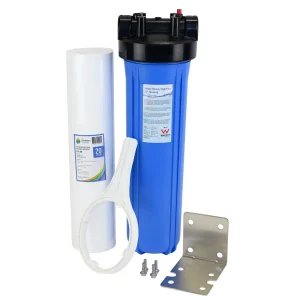 A sediment filter is usually the first stage in any filtration setup. It’s a physical barrier, a pleated or spun-fibre cartridge that traps dirt, sand, rust flakes and other visible particles before they reach the rest of your plumbing.This matters most if your water comes from a rainwater tank or bore, where sediment build-up is common. It also protects downstream filters (like carbon or RO membranes) from clogging prematurely.What it removes: dirt, rust, sand, sediment.
What it doesn’t remove: chlorine, taste and odour issues, bacteria, dissolved chemicals.If sediment is a recurring issue on your property, it’s worth pairing this with regular water tank filtration servicing so the cartridges get replaced before they lose effectiveness.
A sediment filter is usually the first stage in any filtration setup. It’s a physical barrier, a pleated or spun-fibre cartridge that traps dirt, sand, rust flakes and other visible particles before they reach the rest of your plumbing.This matters most if your water comes from a rainwater tank or bore, where sediment build-up is common. It also protects downstream filters (like carbon or RO membranes) from clogging prematurely.What it removes: dirt, rust, sand, sediment.
What it doesn’t remove: chlorine, taste and odour issues, bacteria, dissolved chemicals.If sediment is a recurring issue on your property, it’s worth pairing this with regular water tank filtration servicing so the cartridges get replaced before they lose effectiveness.Activated Carbon Filters
Activated carbon filters work by adsorption, contaminants bind to the surface of the carbon as water passes through. This is the filter type most people are familiar with, since it’s what’s inside most jug filters and under-sink units.They’re particularly good at improving taste and odour, largely by removing chlorine, which is why filtered tap water tastes noticeably different from straight mains water.What it removes: chlorine, some pesticides, volatile organic compounds (VOCs), taste and odour issues. What it doesn’t remove well: dissolved salts, heavy metals, bacteria, viruses.Carbon filters are often used as a second stage after a sediment filter, since removing large particles first extends the carbon’s working life.Reverse Osmosis (RO) Systems
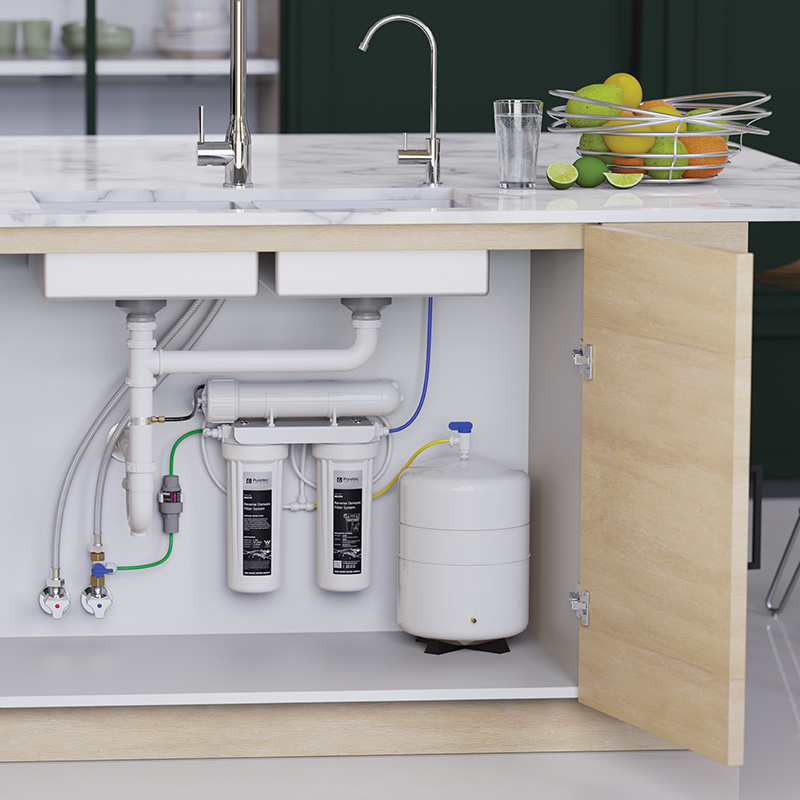
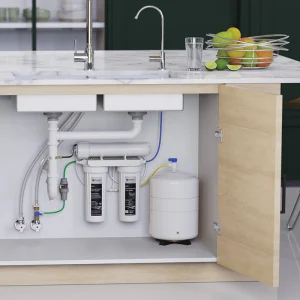 Reverse osmosis pushes water through a semi-permeable membrane fine enough to block dissolved salts, heavy metals, and most microorganisms. It’s the most thorough filtration type available for residential use, but it’s also the slowest and produces some wastewater in the process.RO systems are typically installed as multi-stage units, sediment and carbon pre-filters followed by the membrane, then sometimes a final carbon polish stage.What it removes: heavy metals (lead, arsenic), dissolved salts, fluoride, nitrates, most bacteria and viruses.
What it doesn’t remove: some dissolved gases can pass through, and RO strips beneficial minerals too, which some households remineralise afterward.This level of filtration is worth considering if you’re on bore water or have known contamination concerns, rather than for standard mains-fed properties.
Reverse osmosis pushes water through a semi-permeable membrane fine enough to block dissolved salts, heavy metals, and most microorganisms. It’s the most thorough filtration type available for residential use, but it’s also the slowest and produces some wastewater in the process.RO systems are typically installed as multi-stage units, sediment and carbon pre-filters followed by the membrane, then sometimes a final carbon polish stage.What it removes: heavy metals (lead, arsenic), dissolved salts, fluoride, nitrates, most bacteria and viruses.
What it doesn’t remove: some dissolved gases can pass through, and RO strips beneficial minerals too, which some households remineralise afterward.This level of filtration is worth considering if you’re on bore water or have known contamination concerns, rather than for standard mains-fed properties.Water Softeners (Ion Exchange)
A water softener isn’t strictly a filter in the contaminant-removal sense, it’s designed to treat hard water by swapping calcium and magnesium ions for sodium ions through an ion exchange resin.Hard water itself isn’t a health risk, but it causes limescale build-up in pipes, hot water systems, and appliances, and leaves that chalky residue on tapware and shower screens.What it removes: calcium, magnesium (hardness minerals). What it doesn’t remove: chlorine, bacteria, sediment, heavy metals.If you’re noticing scale build-up alongside general water quality concerns, a softener usually gets paired with a sediment or carbon filter rather than used alone.UV Purification Systems
UV (ultraviolet) purification uses UV light to disable the DNA of bacteria, viruses and other pathogens as water passes through a chamber, without adding any chemicals.This is a common addition for properties relying on rainwater tanks or bore water, where microbial contamination is a bigger concern than it is on treated mains supply.What it removes: bacteria, viruses, other microorganisms. What it doesn’t remove: sediment, dissolved chemicals, heavy metals, taste and odour issues. UV needs clear water to work properly, so it’s almost always installed after a sediment filter, not on its own.Ceramic Filters
Ceramic filters use a porous ceramic shell with microscopic pores small enough to physically block sediment and many bacteria. They’re a lower-tech, lower-maintenance option often used in gravity-fed benchtop filters.They don’t need power to run, which makes them a popular choice for rural properties or as a backup filtration method.What it removes: sediment, some bacteria and protozoa. What it doesn’t remove: viruses (pores are too large), chlorine, dissolved chemicals, heavy metals.Whole-House Filtration Systems
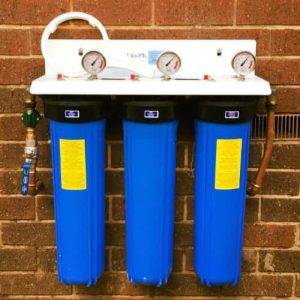 Most of the filters above are point-of-use, installed at a single tap or appliance. A whole-house filtration system (also called point-of-entry) is installed where the water line enters the property, so every tap, shower and appliance gets filtered water.These systems usually combine multiple stages, sediment, carbon, sometimes UV, into one setup rather than a single filter type.What it removes: depends on the stages included, but typically covers sediment, chlorine, and taste/odour issues across the entire property.
Best suited to: properties with noticeable water quality issues across multiple taps, or anyone who doesn’t want to manage separate filters at each fixture.If your property runs off tank water, this is also where it connects with broader system care. See our guide on the types of rainwater tank filter systems for how these stages typically get built into a tank setup, and our whole house water filter installation service page for what a professionally installed system looks like.
Most of the filters above are point-of-use, installed at a single tap or appliance. A whole-house filtration system (also called point-of-entry) is installed where the water line enters the property, so every tap, shower and appliance gets filtered water.These systems usually combine multiple stages, sediment, carbon, sometimes UV, into one setup rather than a single filter type.What it removes: depends on the stages included, but typically covers sediment, chlorine, and taste/odour issues across the entire property.
Best suited to: properties with noticeable water quality issues across multiple taps, or anyone who doesn’t want to manage separate filters at each fixture.If your property runs off tank water, this is also where it connects with broader system care. See our guide on the types of rainwater tank filter systems for how these stages typically get built into a tank setup, and our whole house water filter installation service page for what a professionally installed system looks like.How to Choose the Right Filter for Your Property
The right filter depends on your water source and what you’re actually trying to fix. As a general starting point:- Mains water with a chlorine taste: an activated carbon filter is usually enough.
- Rainwater tank supply: sediment filtration is essential, with UV purification strongly recommended for drinking water.
- Bore water: often needs a combination, sediment, carbon, and possibly reverse osmosis depending on test results.
- Hard water with limescale build-up: a water softener addresses the cause, not just the symptom.
- Whole-property concerns: a whole-house system covers every tap instead of treating fixtures individually.
Frequently Asked Questions
Most properties do. A single filter type rarely covers everything, sediment filters protect downstream equipment, carbon improves taste, and UV or RO handle contaminants that physical filters can’t catch. Multi-stage systems combining two or three of these are the norm rather than the exception.
A water filter removes contaminants like sediment, chlorine, or bacteria. A water softener specifically targets hardness minerals (calcium and magnesium) that cause limescale. They solve different problems and are often used together rather than as alternatives.
For most mains-connected properties, yes, standard treated tap water usually doesn’t need RO-level filtration. It becomes more worthwhile on bore water or where testing has shown specific contaminants like heavy metals or high nitrates.
It varies by filter type and water quality, but sediment and carbon cartridges typically need replacing every 3 to 6 months. Tanks with heavier sediment load may need more frequent changes. Regular servicing catches this before a clogged filter reduces water pressure or effectiveness.
No. UV needs relatively clear water to work properly since sediment can shield microorganisms from the UV light. It’s designed to work after a sediment filter, not instead of one.
Ceramic filters handle sediment and many bacteria without power, which makes them a reasonable backup option. But they don’t remove viruses, so for a rainwater tank supplying drinking water, pairing ceramic or sediment filtration with UV purification gives more complete protection.
Related Articles

Water Testing in NSW: When to Test Your Tank Water and What to Test For
Not sure if your tank water is safe? This guide explains when to test water...
Whole House Water Filter Installation in Sydney: What to Expect and How to Choose
Thinking about a whole house water filter in Sydney? Here's what the installation involves, which...
Is Rainwater Safe to Drink in NSW? What You Need to Know Before You Sip
NSW Health says rainwater can be safe to drink — but only with the right...
