

If you’ve ever wondered why your Sydney tap water tastes different from bottled water, the answer is usually chloramines, which Sydney Water uses as a disinfectant. It’s safe to drink. It’s just not always pleasant to taste or smell, particularly on older distribution networks.
A whole house water filter solves this at the source, before the water reaches any tap, shower, or appliance in your home. Here’s what you need to know before choosing a system and getting it installed.
What Is a Whole House Water Filter?
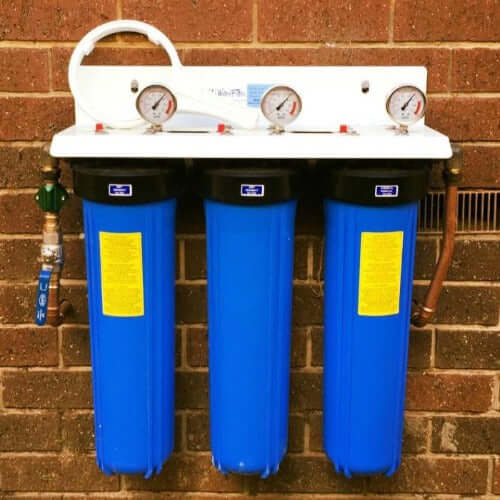
A whole house water filter, also called a point-of-entry filter, is installed at the main water inlet to your property. Every litre of water entering the building passes through the filter before it reaches any outlet. That includes drinking water, shower water, the dishwasher, washing machine, and garden taps.
This is different from an under-sink or bench-top filter, which only treats water at a single point, usually the kitchen. A whole house filter gives you consistent, filtered water at every outlet.
For rainwater tank systems, the equivalent is a tank outlet filter installed between the tank and the pump or pressure system. The principle is the same.
Which Type of System Do You Actually Need?
| System Type | What It Removes | Best For | Approx. Installed Cost |
|---|---|---|---|
| Single-stage sediment filter | Particles, sand, debris | Bore water, rural properties, post-pipe repair | $800 to $1,200 |
| Carbon / KDF filter | Chlorine, chloramines, taste and odour | Sydney mains water with chloramine taste | $900 to $1,500 |
| 2 to 3 stage system (sediment + carbon) | Particles, chloramines, some organic compounds | Most Sydney homes — the standard choice | $1,200 to $2,200 |
| Multi-stage with UV | As above, plus bacteria and viruses | Rainwater tank drinking water systems | $1,800 to $3,000 |
| Whole-house reverse osmosis | Dissolved solids, PFAS, heavy metals | PFAS zones, heavy contamination, commercial use | $3,000 to $5,000+ |
For most Sydney households on mains water, a 2 to 3 stage carbon-based system is the right choice. A single-stage sediment filter alone won’t address chloramine taste. A whole-house RO system is comprehensive but expensive and wastes a significant volume of water in the filtration process. It’s not the default recommendation for standard residential use.
What Does the Installation Process Involve?
Here’s what to expect from a standard whole house water filter installation in Sydney:
- Site assessment — the technician identifies the best location to cut in, typically near the water meter or in the garage near the mains inlet, and confirms pipe material and sizing before selecting fittings
- Water isolation — the property water is turned off at the meter for the duration of the installation
- Pipe work — the filter housing is installed in-line with the mains supply; some installations require a short section of new copper or PEX pipework
- Filter housing and cartridge installation — the housing is fitted, initial cartridges loaded, and all connections tested for leaks under pressure
- Flow rate test — water pressure and flow rate are confirmed at the filter outlet and at a tap to ensure no pressure drop beyond the expected range
- Handover — the technician explains the cartridge replacement schedule and provides documentation
A standard installation takes 2 to 4 hours. Complex installations where access is tight or additional pipe work is needed may take longer. A licensed plumber is legally required for all mains water work in NSW.
How Often Do Filters Need Replacing?
As a general guide for Sydney mains water:
- Sediment pre-filters: every 3 to 6 months
- Carbon block filters: every 6 to 12 months
- UV lamps: annually, regardless of use
- Filter O-rings and seals: check annually during cartridge change
Skipping a cartridge change doesn’t mean the filter stops working. It means it works less effectively and, in the case of a clogged sediment pre-filter, can restrict your water pressure noticeably. Ask about Transform Water’s scheduled filter servicing plan so you don’t have to track the intervals yourself.
Will a Whole House Filter Reduce My Water Pressure?
A properly sized system should have minimal impact on your water pressure. The filter housing creates a small amount of resistance, but this is engineered into the selection process. The housing diameter and flow rating are matched to your property’s incoming pressure and usage profile. If you notice a significant pressure drop after installation, the most likely cause is a blocked sediment pre-filter due for replacement.
Older properties with lower incoming pressure, common in some parts of western Sydney, may need a booster pump alongside certain filter systems. Transform Water will assess this during the site visit and advise before any work begins.
Frequently Asked Questions
Do I need a licensed plumber to install a whole house water filter in NSW?
Yes. Any work on your mains water supply, including installing a filter at the point of entry, must be done by a licensed plumber in NSW. Unlicensed plumbing work is illegal and may affect your home insurance. Transform Water holds all required NSW licences.
How long does a whole house water filter installation take?
Most residential installations take 2 to 4 hours. Complex installations where access is difficult or additional pipe work is needed may take longer. Transform Water will give you a realistic timeframe after an initial site assessment.
What does a whole house filter actually remove?
It depends on the system. A sediment filter removes particles and debris. A carbon filter removes chlorine, chloramines, and improves taste and odour. A UV system kills bacteria and viruses. Reverse osmosis removes dissolved solids, heavy metals, and PFAS. Choose based on what your water actually contains, not on maximum specifications you may never need.
Is a whole house filter better than an under-sink filter?
They serve different purposes. A whole house filter protects every outlet from sediment and chloramines. An under-sink RO filter provides more intensive treatment at a single point. Many households use both: a whole house filter for broad protection and an under-sink system for drinking and cooking water.
Can a whole house filter work with my rainwater tank system?
Yes. For rainwater tank systems, the filter is installed on the tank outlet rather than at the mains. Transform Water designs and installs filtration systems specifically for rainwater applications, including multi-stage systems with UV treatment for households using tank water for drinking.
How much does whole house water filter installation cost in Sydney?
Entry-level single-stage systems cost approximately $800 to $1,200 installed. Mid-range 2 to 3 stage systems cost $1,200 to $2,200. Premium multi-stage or UV systems range from $2,000 to $3,500 or more. Ongoing costs include cartridge replacement at approximately $100 to $300 per year depending on the system. Contact Transform Water for a quote specific to your property.
Which filter brands does Transform Water install?
We install and service Puretec, Billi, Zip, Rain Harvesting, and a range of other quality brands. We’ll recommend the right system for your water quality, usage, and budget, not the most expensive option available.
Ready to Install a Whole House Water Filter in Sydney?
Transform Water handles everything from system selection to licensed installation and ongoing servicing across Sydney and regional NSW.
Related Articles

Water Testing in NSW: When to Test Your Tank Water and What to Test For
Not sure if your tank water is safe? This guide explains when to test water...

Is Rainwater Safe to Drink in NSW? What You Need to Know Before You Sip
NSW Health says rainwater can be safe to drink — but only with the right...
Rainwater Tank Pump Maintenance: A Practical Guide for NSW Homeowners
How often should you service a rainwater tank pump? This NSW guide covers service intervals,...
