
Why You Can’t Drink the Water Straight After a Tank Clean
The cleaning process itself introduces short-term contamination — residual cleaning agents, disturbed silt that wasn’t fully extracted, and bacteria in the water column that was used to flush and rinse the tank interior. Before that water settles and before any disinfection treatment reaches full effectiveness, the water quality is in a transitional state that shouldn’t be used for drinking, cooking, or food preparation.
Step 1: The Initial Flush
After the tank is refilled following a clean, run all downstream taps connected to your rainwater system for several minutes each. This clears the plumbing lines of any residual cleaning agents or disturbed water that moved through the system during refill. Do not use this flushed water for drinking or food contact purposes — it can go to garden irrigation or stormwater.
As a general guide: flush until the water runs clear at each tap and any unusual smell has dissipated. For most residential systems, this takes 10–15 minutes of running across multiple taps.
Step 2: Disinfection
Chlorination
Chlorination using food-grade sodium hypochlorite is the most common disinfection method for residential rainwater tanks. The critical point: you cannot simply pour pool chlorine into a drinking water tank and call it done. The concentration matters. Contact time matters. And the chlorine must be flushed through to all connected plumbing before the contact time clock starts. Incorrect chlorination either under-treats (ineffective) or over-treats (unpalatable water and potential chemical exposure).
UV disinfection
If your filtration system includes a UV unit, it provides ongoing disinfection of water as it passes through the outlet line. However, UV is a point-of-use treatment — it treats water as it flows past the lamp, not the stored water in the tank. It does not replace the need for a post-clean flush and disinfection of the tank itself.
Step 3: Water Testing Before Resuming Drinking Use
For residential rainwater tanks in NSW, the minimum recommended test covers:
- Total coliforms and E. coli: indicators of faecal contamination. The target is zero detectable coliforms in 100mL.
- Turbidity: a measure of water clarity. The ADWG target is below 1 NTU for drinking water.
- pH: chlorination changes water pH. The ADWG range for drinking water is 6.5–8.5.
Water tests are carried out by NATA-accredited laboratories. Results typically return within 2–5 business days. If your post-clean test returns a coliform result above zero, the disinfection step should be repeated at a higher concentration or longer contact time before retesting.
How Long Should You Wait Before Testing?
Allow at least 48–72 hours after disinfection treatment before collecting a water test sample. This gives the chlorine contact time to work and allows chlorine residual to dissipate to a testable level. Testing immediately after chlorination will give you an artificially high chlorine reading that masks the coliform result.
During the waiting period, continue using the tank for toilet flushing and garden irrigation. Use a separate potable water source for drinking and cooking until the test result clears.
The Role of UV Filtration Post-Clean
- Ensure the UV sleeve is clean and the lamp has been serviced within the past 12 months. A fouled sleeve or degraded lamp does not deliver rated UV-C intensity.
- Run water through the UV unit during the initial flush to clear any cleaning agent residue from the UV housing and plumbing.
- Once the post-clean disinfection and test protocol is complete and your water has been confirmed safe, the UV unit is your ongoing protection against bacterial contamination at the point of use.
When to Update or Replace Filter Cartridges at the Same Time
The period immediately after a tank clean is the optimal time to replace your sediment and carbon filter cartridges, for two reasons:
- The clean has removed the bulk of the contaminant load. A fresh cartridge starting in a clean-tank environment will last longer than a cartridge installed in a tank that still had significant sludge.
- Your technician is already on site. Combining the tank clean and filter service saves a separate call-out.
If you haven’t replaced your sediment cartridge in the past 6 months, or your carbon filter in the past 12 months, schedule both at the same time as your tank clean.
Frequently Asked Questions
Why can’t I drink my rainwater straight after a tank clean?
The cleaning process itself introduces short-term contamination — residual cleaning agents, disturbed silt that wasn’t fully extracted, and bacteria in the water column used to flush and rinse the tank interior. Before that water settles and disinfection treatment reaches full effectiveness, the water quality is in a transitional state that shouldn’t be used for drinking, cooking, or food preparation.
How long should I wait before testing water after disinfecting my tank?
Allow at least 48–72 hours after disinfection treatment before collecting a water test sample. This gives the chlorine contact time to work and allows chlorine residual to dissipate to a testable level. Testing immediately after chlorination will give you an artificially high chlorine reading that masks the coliform result.
What water tests should I do after a rainwater tank clean in NSW?
The minimum recommended test covers total coliforms and E. coli (target: zero detectable coliforms in 100mL), turbidity (target: below 1 NTU per the Australian Drinking Water Guidelines), and pH (ADWG range for drinking water is 6.5–8.5). Tests are carried out by NATA-accredited laboratories with results typically returning within 2–5 business days.
Does my UV filter protect me if I skip the post-clean disinfection step?
No. UV is a point-of-use treatment — it treats water as it flows past the lamp, not the stored water in the tank. It does not replace the need for a post-clean flush and disinfection of the tank itself. UV treatment is your ongoing protection once the tank water has been initially flushed and treated.
Should I replace my filter cartridges at the same time as my tank clean?
Yes, for two reasons: the clean has removed the bulk of the contaminant load, so a fresh cartridge starting in a clean-tank environment will last longer, and your technician is already on site, saving a separate call-out. If you haven’t replaced your sediment cartridge in the past 6 months or your carbon filter in the past 12 months, schedule both at the same time as your tank clean.

Related Articles
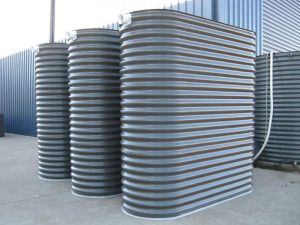
Underground vs. Above-Ground Rainwater Tank: Which Is Right for Your NSW Property?
Underground or above-ground rainwater tank? Full cost, maintenance, council approval and suitability comparison for NSW...
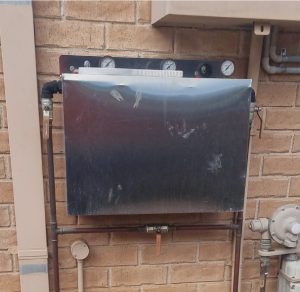
When Should You Service Your Rainwater Tank Filtration System? Signs, Intervals, and What Gets Checked
Rainwater tank filtration systems need servicing every 6–12 months. Learn the signs it's overdue, what...
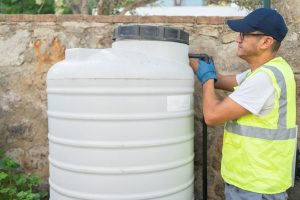
Can a Cracked Poly Water Tank Be Repaired? What’s Fixable, What Isn’t, and What It Costs
Most cracks in polyethylene water tanks can be repaired by plastic welding. Find out what's...
